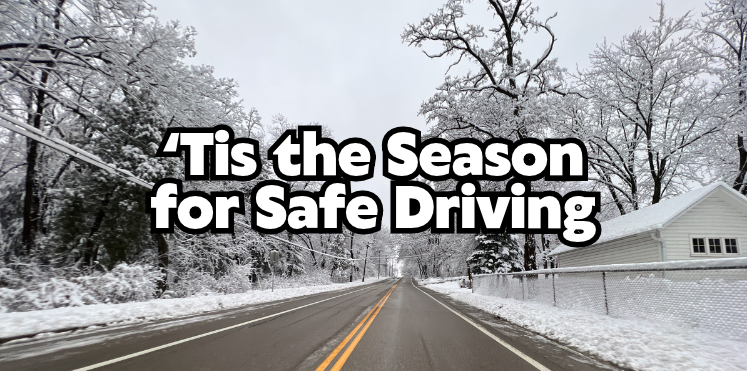
As winter holidays fill the calendar and the roads become busier, the Airport Corridor Transportation Association (ACTA) encourages all drivers to remain sober behind the wheel, as well as prepare your vehicle for winter driving. From December 2020 through 2024, 4,994 people died in drunk-driving crashes, and in 2024, there were an estimated 24,383 crashes due to snow or sleet. No matter where the roads may take you this winter season, it’s important to exercise caution. Here are some helpful tips courtesy of AAA and NHTSA to help keep you safe and moving this upcoming winter:
Plan Ahead for a Safe Celebration
-
Always drive 100% sober. Even one alcoholic beverage could be one too many.
-
Plan ahead: Before you have even one drink, designate a sober driver to get you home safely. If you wait until you’ve been drinking to make this decision, you might not make the best one.
-
You have options to get home safely: Designate a sober driver or call a taxi or rideshare. Getting home safely is always worth it.
-
If it’s your turn to be the designated driver, take your job seriously and don’t drink.
-
If you see a drunk driver on the road, contact local law enforcement.
-
If you have a friend who is about to drink and drive, take the keys away and let a sober driver get your friend home safely.
Tips for Driving in the Snow
-
Stay home. Only go out if necessary. Even if you can drive well in bad weather, it’s better to avoid taking unnecessary risks by venturing out.
-
Drive slowly. Always adjust your speed down to account for lower traction when driving on snow or ice.
-
Accelerate and decelerate slowly. Apply the gas slowly to regain traction and avoid skids. Don’t try to get moving in a hurry and take time to slow down for a stoplight. Remember: It takes longer to slow down on icy roads.
-
Increase your following distance to five to six seconds. This increased margin of safety will provide the longer distance needed if you have to stop.
-
Know your brakes. Whether you have antilock brakes or not, keep the heel of your foot on the floor and use the ball of your foot to apply firm, steady pressure on the brake pedal.
-
Don’t stop if you can avoid it. There’s a big difference in the amount of inertia it takes to start moving from a full stop versus how much it takes to get moving while still rolling. If you can slow down enough to keep rolling until a traffic light changes, do it.
-
Don’t power up hills. Applying extra gas on snow-covered roads will just make your wheels spin. Try to get a little inertia going before you reach the hill and let that inertia carry you to the top. As you reach the crest of the hill, reduce your speed and proceed downhill slowly.
-
Don’t stop going up a hill. There’s nothing worse than trying to get moving up a hill on an icy road. Get some inertia going on a flat roadway before you take on the hill.
Check for Recalls
-
NHTSA’s Recalls Look-up Tool lets you enter a vehicle identification number (VIN) or license plate to quickly learn if your vehicle has a critical safety issue that has not been repaired, and how to get that repair done for free.
-
You can also download NHTSA’s SaferCar app and enter your vehicle and equipment information. If a recall is issued, you’ll get an alert on your phone.
Avoid Risky Driving Behaviors
-
You know the rules: Do not text or drive distracted and obey posted speed limits.
-
Always wear your seat belt.