When commuting by bike, you’ll often find yourself sharing the road with vehicles. By understanding the laws, safety regulations, and maintaining the right mindset, you can become a confident and street-smart cyclist.
-
General Bicycle Law
-
Pennsylvania’s Vehicle Code considers “pedalcycles” as vehicles and provides that every person riding a pedalcycle upon a roadway shall be granted all of the rights and responsibilities applicable to a driver of a vehicle, with certain exceptions discussed below.
-
If you ride in violation of the traffic laws, you greatly increase your risk of a crash and will likely be found at fault in the event of an accident.
-
-
Choosing a Bicycle Helmet
-
Every bike ride begins with putting on a helmet. But it’s equally important that you ensure a proper fit so your helmet can best protect you. Size can vary between manufacturers. Follow the steps to fit a helmet properly. It may take time to ensure a proper helmet fit, but your life is worth it.
-
When it comes to selecting a bike helmet, ask yourself these three questions:
-
Is it legit? There are many bike helmets on the market, but only some comply with federal safety standards. Look for the label that shows the helmet meets the U.S. Consumer Product Safety Commission bicycle standard for safety. When properly used, helmets meeting this standard can protect against skull fractures and severe brain injuries
-
Does it fit? A poorly fitting helmet will not protect your skull in a crash. A bike helmet that fits right should be comfortable, sit level on your head, provide adequate head coverage without blocking your vision, and be snug so that it cannot fall off when fastened.
-
What type is it? There are helmets for many different activities, and they are made to protect your head from the kind of impact associated with a particular activity or sport. If you are choosing a helmet for riding a bike, be sure the helmet is a bike helmet. Always choose the right helmet for the right activity. Visit CPSC.gov and search “helmets” to find out more about the different types of helmets.
-
-
-
Fitting a Bicycle Helmet
-
When it comes to fitting a bike helmet, remember the two-finger rule:
-
Two fingers above your eyebrows. Place two fingers flat on your forehead just above your eyebrows. The front rim of your helmet should sit above your fingers. Your helmet should sit level, straight, and flat on your head.
-
Two-finger V at your ears. Using two fingers, form a V around your ear. Adjust your helmet straps to follow the same path as your fingers. Do this for both ears.
-
Two fingers under your chin. When your helmet straps are fastened, you should be able to fit just two fingers between the straps and your chin. Tighten or loosen the straps as needed so your helmet feels snug but not too tight.
-
-
Remember: Never buy a helmet to grow into — wear a helmet that fits now. Wearing a properly fitted bicycle helmet can prevent serious injuries.
-
-
Fitting a Bike
-
When it comes to picking a bike, you need to make sure it’s the right size for you. Be sure that your feet reach the pedals while seated and your hands can easily grip the brakes when you need to slow or stop. This will give you better control of the bike, ensuring a safer ride.
-
Bike Height
-
While straddling your bike with your feet flat on the ground, you should have at least 1 to 2 inches between your crotch and the bike frame’s top tube. Depending on the bike and type of riding – whether you are touring, commuting, or mountain biking – you may need more space
-
-
Handlebar Reach
-
The distance from the seat post to the handlebars should allow you to sit in a comfortable riding position with a soft bend in your arms. You should not have to stretch to reach or squeeze the brakes.
-
-
Saddle Height
-
The seat’s height should allow a slight bend in your leg while extending the bottom pedal with your foot when seated.
-
-
The Right Type of Bike
-
Different types of riding require different bikes. Make sure you choose the right bike—whether a road, hybrid, or mountain bike. Find a bike shop with a professional who can help you choose the right type and size of bike.
-
-
-
Pre-Ride Safety Check
-
Every time you ride your bike, do a quick A-B-C check and take a test ride to make sure your bike is working and its parts are in good shape. Riding an unsafe bicycle can lead to a crash and injuries. A safe ride starts with a safe bike – and a helmet.
-
Air
-
Inspect your bike’s tires to make sure they have the right amount of air pressure. Most bike tires have the optimal air pressure printed on the tire sidewalls. Check for any cuts or nicks and be sure the tire treads are not worn down. Replace worn down or damaged tires.
-
-
Brakes
-
Test your brakes to make sure they stop your bike when you squeeze the brake handles. Check that the brake pads are not worn down and the cables are not damaged or loose. The brakes should not rub against the bike while the wheel is spinning, turning, or when you are riding. Also be sure the quick-release levers that hold the wheels on are tight.
-
-
Chains
-
Check your bike chains to make sure they are tight, clean, lubricated, and rust-free. The chains should spin your pedals and move freely, particularly when changing gears. A rusty chain drags, changes gears poorly and could even snap.
-
-
-
Bicycling Safety Recommendations
-
Always wear a helmet. Pennsylvania law requires all cyclists under age 12 to wear an approved bicycle helmet.
-
Obey traffic laws.
-
Obey stop signs and red lights.
-
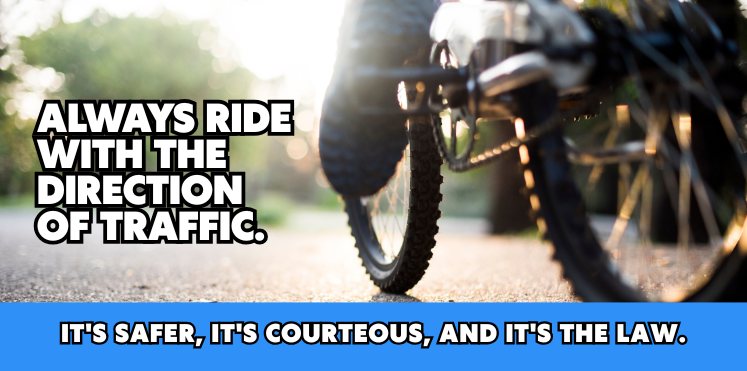
Never ride against the flow of traffic.
-
Be predictable:
-
Ride in a straight line with at least one hand on the handlebars.
-
Check to be sure your path is clear, and change directions without swerving.
-
Use hand signals to indicate when you are turning.
-
-
Make yourself visible:
-
Consider wearing bright cycling clothes.
-
Put reflectors on your wheels and on the front and rear of your bike.
-
At night, a front light and rear reflector are required.
-
-
Maintain your bike:
-
Carry a pump, a patch kit and a spare tube.
-
-
Take care of yourself:
-
Carry plenty of drinking water and snacks for energy.
-
Bring your cellphone in case of an emergency.
-
-
For more information on biking safety, visit the League of American Bicyclists Bike Education page.