In rural America, where distances to essential services and businesses tend to be greater than in
urban areas, 3.7 million residents do not drive. Although public transportation service exists in 83
percent of US counties, many rural residents either are unaware of the service or find it inconvenient
or difficult to navigate. (Source)
While public transportation may be available in some larger urban areas in the US, as a general rule,
people who do not drive or own cars are at a distinct disadvantage across the nation. Buses and railway systems are spotty at best, making it difficult to get to work or to other places. Although public transport is a more environmentally friendly choice, the systems throughout the country are in deep need of upgrades to make them more user-friendly and accessible.
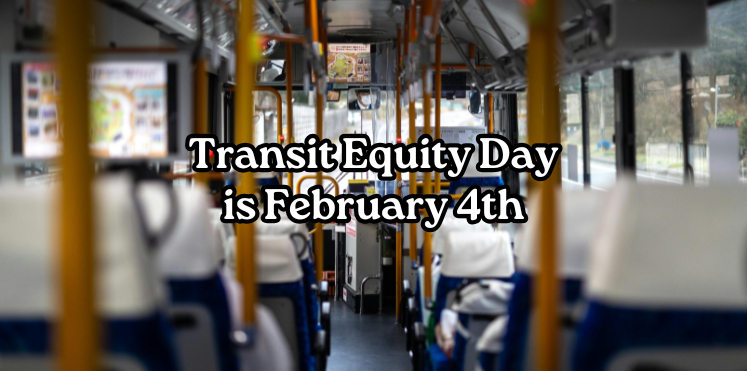
Transit Equity Day is here to celebrate the strides that have been made in making public transportation accessible to anyone. And it’s also an important time to consider what ways cities and towns can re-think their infrastructures to promote better service and access for everyone! The first Transit Equity Day was celebrated in 2017, situated on this date as a nod to an icon in the world of equality, Rosa Parks.
Parks was instrumental in the Montgomery Bus Boycott of 1955, which was a critical catalyst for
ending segregation on public transportation that led to a landmark US Supreme Court decision in
1956. The event is scheduled to be celebrated annually on the anniversary of Parks’ birth on February 4,
1913.
Sometimes referred to as Transit Equality Day, this event is meant to not only show appreciation for
those who have fought to end discrimination but also act as a reminder to promote equality in communities through better access to public transportation. (Source)